
Your website gets traffic but no leads. Visitors are finding your business through Google, social media, referrals, or other marketing channels, but your contact forms remain empty, and enquiries are few.
It can be frustrating. You have invested time and money into SEO, content, advertising, or web design, so why aren’t those visitors becoming customers?
The problem may not be your traffic.
It may be your website conversion rate.
Getting visitors is only the first step. Your website also needs to attract the right audience, communicate your value clearly, build trust, provide a good user experience, and make it easy for visitors to take action.
If your website gets visitors but no leads, here are 10 common reasons why—and what you can do about them.
Why Does My Website Get Traffic but No Leads?
Website traffic and lead generation are two different things.
Traffic tells you how many people are visiting your website. Leads tell you how many of those visitors take a valuable action, such as requesting a quote, submitting a contact form, booking a consultation, calling your business, or starting a purchase.
Think of your website as a funnel:
Traffic → Landing Page → Value → Trust → Action → Lead
If you are getting traffic but no conversions, something may be breaking down between the moment visitors arrive and the moment they are asked to take action.
The good news is that you don’t necessarily need more traffic.
You may need to make better use of the traffic you already have.
1. You’re Attracting the Wrong Website Traffic
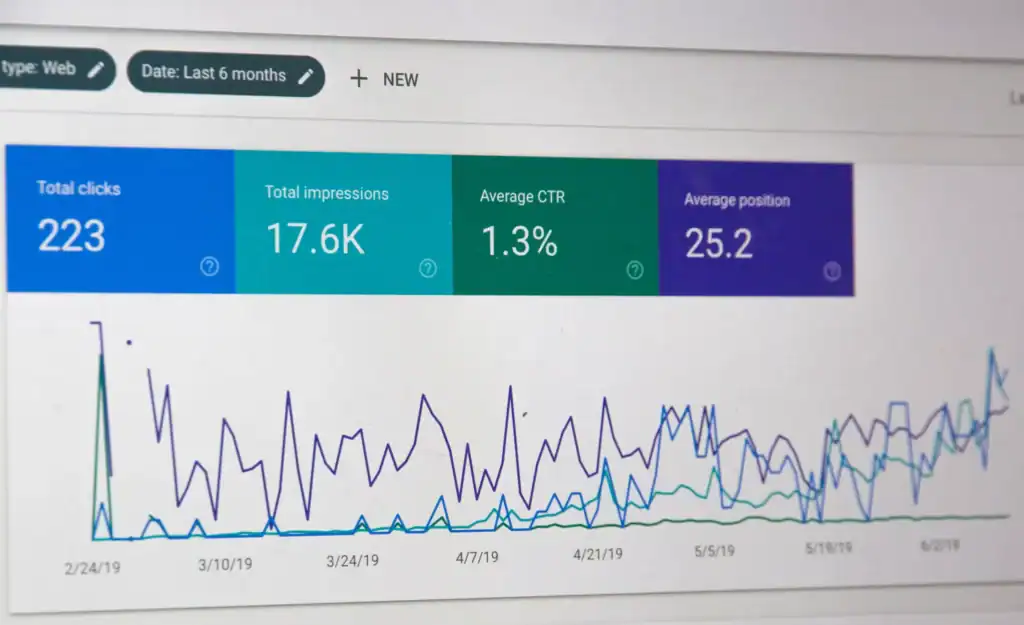
One of the most common reasons for website traffic but no conversions is attracting people who are unlikely to become customers.
High traffic numbers can look impressive, but traffic isn’t valuable if it comes from people who aren’t interested in what you sell.
For example, someone searching for:
“How to build a website”
may simply be researching how to create one themselves.
Someone searching for:
“WordPress web design services for small business”
is much more likely to be looking for professional help.
This is where search intent matters.
Review the keywords bringing visitors to your website and ask:
- Are these keywords relevant to my services?
- Do they match what my ideal customer is looking for?
- Are visitors located in the areas I serve?
- Does the search indicate a buying problem or just general research?
- Are my landing pages aligned with those searches?
Your goal shouldn’t be to attract everyone.
Your goal should be to attract qualified visitors with a genuine need for your products or services.
If you need help attracting more relevant search traffic, inquire about our SEO services.
2. Your Website Doesn’t Clearly Explain What You Offer
Visitors should understand what your business does within seconds of landing on your website.
If your homepage uses vague headlines such as “We Build Digital Experiences” or “Your Success Is Our Mission,” visitors may still have no idea what you actually offer.
Your hero section should answer four basic questions:
What do you offer? Who do you help? What problem do you solve? What should the visitor do next?
For example:
Professional WordPress Web Design for Small Businesses
Get a fast, mobile-friendly website designed to turn visitors into customers.
Get a Free Website Consultation
This is much clearer because the visitor immediately understands the service, audience, benefit, and next step.
If your messaging is unclear, even highly qualified visitors may leave before exploring your services.
3. Your Calls to Action Are Weak
If your website gets traffic but no leads, review your calls to action.
Visitors shouldn’t have to figure out what they are supposed to do next.
Generic buttons such as:
- Learn More
- Click Here
- Submit
- Read More
don’t always give visitors a compelling reason to act.
Instead, make your CTA specific and focused on the benefit or action:
- Get a Free Quote
- Book a Consultation
- Request a Website Audit
- Start Your Project
- Get a Free Estimate
- Schedule a Discovery Call
Your primary CTA should also be easy to find.
Don’t hide it at the bottom of a long page and expect every visitor to scroll that far.
For important service pages, consider placing a clear CTA in the hero section, after key benefits, after social proof, and near the end of the page.

4. Your Landing Pages Don’t Match Search Intent
Imagine someone searches for:
“website maintenance services”
and lands on a generic homepage that mainly talks about web design.
They may leave—not because they aren’t interested in your business, but because the page doesn’t immediately address what they were looking for.
This is a common reason for website traffic not converting.
Your:
Keyword → Search Intent → Page → Headline → Content → CTA
should all be aligned.
If someone searches for a specific service, send them to a page specifically designed for that service.
A strong landing page should clearly explain:
- The problem you solve
- Who the service is for
- What the service includes
- Why customers should trust you
- What makes your offer different
- What the visitor should do next
This also gives search engines and users a clearer understanding of what the page is about.
5. Your Website Doesn’t Build Enough Trust
Visitors don’t become leads simply because a website looks professional.
They also need to believe that your business can deliver what it promises.
This is especially important when someone is considering an expensive service or giving you their contact information.
Add relevant trust signals throughout your website, such as:
- Customer testimonials
- Google reviews
- Case studies
- Portfolio examples
- Client logos
- Certifications
- Awards
- Years of experience
- Results and statistics
- Clear contact information
- Guarantees where appropriate
Don’t just tell visitors that you’re good at what you do.
Show them.
For example, instead of saying:
“We create high-quality websites.”
Show examples of websites you’ve built and explain what you improved.
Your web design portfolio can become an important part of this conversion process.
6. Your Website Is Difficult to Use
Sometimes the problem isn’t your offer.
It’s the experience visitors have while trying to understand it.
Poor navigation, cluttered layouts, small text, confusing menus, unclear buttons, and difficult forms can all create friction.
Your website should make it easy for visitors to answer three questions:
Where am I? What can you do for me? What should I do next?
Mobile usability is especially important because many visitors will access your website from smartphones.
Google provides guidance on creating mobile-friendly websites and recommends designing pages that work well across devices.
Check your website on an actual phone and test the entire customer journey.
Can visitors:
- Find your main service?
- Read your content comfortably?
- Understand your offer?
- Find your CTA?
- Complete your contact form?
- Call or book without difficulty?
If not, your user experience could be costing you leads.
A professional UX/UI design service can help identify and remove these conversion barriers.
7. Your Website Is Too Slow
A slow website can cause visitors to leave before they even see your offer.
Large images, excessive plugins, poor hosting, unoptimized code, unnecessary scripts, and third-party integrations can all affect website performance.
Google’s Core Web Vitals provide useful metrics for evaluating real-world website performance, including loading performance, responsiveness, and visual stability.
You can use Google PageSpeed Insights to test individual pages.
Common improvements include:
- Compressing images
- Using modern image formats
- Improving caching
- Removing unnecessary plugins
- Optimizing CSS and JavaScript
- Reducing third-party scripts
- Improving hosting
- Keeping WordPress and plugins updated
Website performance shouldn’t be treated as an SEO issue alone.
It is also a conversion issue.
If your website is slow, visitors may never reach your CTA.
Our website maintenance services can help keep your website updated, secure, and performing properly.
8. Your Contact Form Creates Too Much Friction
A potential customer may be ready to contact you—but a complicated form can make them change their mind.
Consider the difference between these two forms.
Long Form
- Name
- Phone
- Company
- Address
- Company size
- Budget
- Industry
- Project timeline
- Ten additional questions
Simple Form
- Name
- Phone
- How can we help?
The right form depends on your business and the information your sales process requires. However, don’t ask for information you don’t actually need at that stage.
Also test your forms regularly.
A broken form, unclear error message, or missing confirmation can silently prevent leads from reaching you.
9. Your Website Has Too Many Choices
More choices don’t always produce more conversions.
If a page contains multiple competing CTAs, popups, banners, newsletter forms, social media links, downloads, and promotional offers, visitors may not know what to do next.
Each important page should have a clear primary conversion goal.
For a service page, it might be:
Book a Consultation
For a product page:
Buy Now
For a lead magnet:
Download the Guide
You can still provide secondary navigation and supporting actions, but they shouldn’t compete with the primary goal.
Good conversion optimization isn’t about adding more buttons.
It’s about making the right action easier to take.
10. You’re Not Measuring Your Conversion Funnel
If your website gets traffic but no leads, don’t rely on assumptions.
Use data to find where visitors are dropping off.
Track metrics such as:
- Traffic sources
- Landing page performance
- Engagement
- CTA clicks
- Form starts
- Form completions
- Phone clicks
- Booking requests
- Conversion rate
- Device performance
- Exit pages
Google Analytics can help you understand how visitors interact with your website.
Google Search Console can help you understand how your website performs in Google Search, including queries, impressions, clicks, and pages receiving organic traffic.
For example, imagine you discover that:
10,000 visitors → 2,000 landing page visits → 50 CTA clicks → 5 leads
That tells you there may be a significant opportunity to improve the landing page and CTA experience.
You don’t necessarily need 20,000 visitors.
You may need to make those existing visitors more likely to take action.
How to Turn Website Traffic Into Leads
If you’re wondering how to turn website traffic into leads, use this simple framework.
1. Attract the Right Visitors
Target keywords and audiences that are relevant to your products or services.
2. Improve Your Messaging
Clearly explain what you offer, who you help, and the benefit you provide.
3. Build Trust
Use testimonials, reviews, case studies, portfolios, and other evidence.
4. Improve the User Experience
Make navigation, content, buttons, and forms easy to understand.
5. Strengthen Your CTAs
Give visitors a clear next step.
6. Remove Friction
Reduce unnecessary fields, distractions, slow-loading elements, and confusing processes.
7. Measure and Test
Use analytics to understand what visitors do and continuously improve your conversion funnel.
This is the foundation of effective website conversion optimization.
Website Traffic vs. Leads: What Should You Measure?
Traffic is useful, but it shouldn’t be your only KPI.
| Metric | What It Tells You |
| Organic traffic | How many visitors SEO generates |
| Engagement | Whether visitors interact with your content |
| Landing page conversion rate | How effectively a page generates leads |
| CTA clicks | Whether visitors engage with your offer |
| Form completion rate | Whether your form creates friction |
| Leads | Number of potential customers generated |
| Lead conversion rate | Percentage of visitors who become leads |
A website that receives 2,000 highly qualified visitors and generates 50 leads can be more valuable than one receiving 10,000 visitors and generating 10 leads.
Quality and conversion matter as much as traffic volume.
When Should You Redesign Your Website for Better Conversions?
A complete redesign isn’t always necessary.
Before rebuilding your website, identify the actual problem.
You may need targeted improvements if:
- Your messaging is unclear
- Your CTAs are weak
- Your forms are difficult to complete
- Your mobile experience is poor
- Your pages don’t match search intent
- Your website is slow
- Your trust signals are limited
- Your conversion tracking isn’t set up
However, a redesign may make sense if the website has fundamental problems with its structure, branding, UX, technology, responsiveness, or content architecture.
The goal shouldn’t be to build a prettier website.
The goal should be to build a website that helps the right visitors take the right action.
Frequently Asked Questions
Why does my website get traffic but no leads?
A website can get traffic without generating leads when it attracts the wrong audience, has unclear messaging, weak calls to action, poor user experience, limited trust signals, slow performance, complicated forms, or an ineffective conversion funnel.
How can I convert website visitors into leads?
Focus on attracting qualified visitors, creating a clear value proposition, building trust, improving UX, using strong calls to action, simplifying forms, improving website performance, and tracking conversion data.
Why are visitors leaving my website without contacting me?
Visitors may leave because they don’t understand your offer, don’t trust the business, can’t find the next step, encounter a poor mobile experience, experience slow loading times, or find the contact process too difficult.
How much website traffic do I need to generate leads?
There is no fixed amount of traffic required to generate leads. Traffic quality, search intent, your offer, user experience, and conversion rate all affect lead generation. A smaller amount of qualified traffic can produce more leads than a large amount of low-intent traffic.
What is a good website conversion rate?
There is no universal conversion rate that applies to every website. Conversion rates vary by industry, traffic source, offer, audience, device, and conversion goal. Instead of focusing only on a generic benchmark, establish your current baseline and work to improve it over time.
Should I redesign my website if it gets traffic but no leads?
Not necessarily. First identify where visitors are dropping off. Improving messaging, CTAs, UX, forms, performance, trust signals, and conversion tracking may improve results without requiring a complete redesign.
Final Thoughts
If your website gets traffic but no leads, don’t immediately assume you need more traffic.
First, look at what happens after visitors arrive.
Are you attracting the right audience? Is your value proposition clear? Do visitors trust your business? Is the website easy to use? Are your calls to action compelling? Is your contact form simple? Is your website fast?
Small improvements across these areas can make a significant difference in how effectively your website turns visitors into enquiries.
Your website shouldn’t just attract visitors.
It should give the right visitors a clear and compelling reason to take action.
Getting Traffic but Not Enough Leads?
Your website may have a conversion problem rather than a traffic problem.
Request a free website audit to identify opportunities to improve your website’s messaging, UX, performance, SEO, and conversion funnel.